„No one is born a parent” – Poland addresses demographic challenges with a new narrative on parenthood
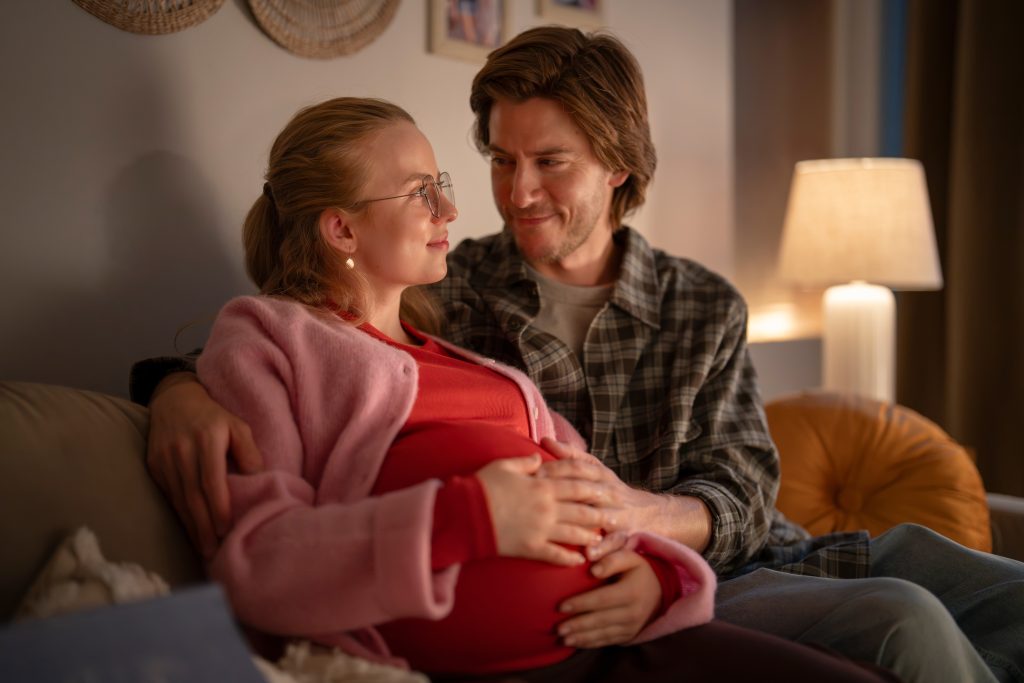
The Ministry of Family, Labour and Social Policy and the Share the Care Foundation have launched a nationwide campaign, „No one is born a parent. Readiness comes with time.” Its goal is to build a more positive, but also realistic, narrative about parenthood – one that does not overlook the actual challenges, but also highlights the joy, closeness and sense of purpose that it brings to life.
Financial benefits, parental leave and access to high-quality childcare services are essential components of family policy. However, wider European experience shows that systemic solutions in themselves are often insufficient in addressing the challenges posed by declining birth rates. Researchers are increasingly pointing to the importance of cultural and psychological factors – such as social expectations, perceptions of parenthood and the language we use to discuss it. The nationwide social campaign, „No one is born a parent. Readiness comes with time” – initiated by the Polish Ministry of Family, Labour and Social Policy and implemented in cooperation with the Share the Care Foundation – focuses on this dimension. It aims to support those who wish to have a first or subsequent child, free from needless pressure and with respect for individual choices.
Poland facing demographic challenges
Like many European countries, Poland is grappling with significant demographic challenges. The persistently low fertility rate, the declining number of births and an ageing society raise questions about the future of families, the labour market and social security systems.
According to data from Statistics Poland (GUS), 238,000 children were born in Poland in 2025, with a fertility rate of just 1.07 – well below the 2.10-2.15 range required for simple generational replacement. In the first three quarters of 2026, 176,000 children were born. GUS notes that while the total annual number of births continues to fall slightly, the long-standing, sharp downward trend has clearly slowed, and the fertility rate may see a modest increase from 1.07 to approximately 1.11.
Behind these figures lie not only economic and social shifts but also an evolution in how parenthood is approached. The decision to have a child is increasingly a conscious choice, linked to a sense of security, life stability, the ability to pursue personal aspirations and the quality of one’s relationship with a partner.
What the 2026 EU Demographic Report says: support, don’t pressure
Poland’s experience fits into a broader European picture. The European Commission’s 2026 EU Demographic Report (“Demographic transformation in the EU: understanding change and adapting to its consequences”) shows that the fertility rate in the EU fell from 1.57 in 2010 to 1.34 in 2024, with 3.55 million children born in 2024. Even under a moderately optimistic recovery scenario, the fertility rate in the EU will remain well below the replacement level – approximately 2.1 – until 2100.
The report indicates that low fertility rates are not due to a lack of desire to have children. It describes a gap between the number of children people would like to have and the number they actually have: economic uncertainty, longer and more complex educational and career paths and high housing costs can prevent people from achieving their desired family size. Norms regarding partnerships, work-life balance and gender roles are also shifting.
The report points out that measures aimed directly at increasing the number of births yield mixed results and some may have unintended consequences for sexual and reproductive health, human rights and gender equality. It is increasingly important to create conditions that allow people to pursue their own family plans. Well-designed parental leave, accessible childcare and financial support – along with measures that facilitate work and family life balance, promote gender equality, ensure employment stability and improve housing availability – all serve this purpose. However, the impact of individual instruments on fertility rates remains varied and, typically, moderate.
The authors stress that there is no single „silver bullet”: demographic challenges cannot be addressed solely through measures focused on fertility rates or migration. Instead, coordinated action is required across various policy areas and levels of governance -including investments in children and youth, the provision of accessible housing and the promotion of flexible work arrangements.
The conclusion is that the most promising path forward is not to pressure people to have children, but rather to support those who wish to become parents by building a reliable support system around them – encompassing financial security, housing, childcare, healthcare, flexible work and the equitable sharing of caregiving responsibilities at home.
This is the core premise behind the „No One is Born a Parent” campaign.
From demographic data to the needs of parents
To better understand the human dimension behind these statistics, the ministry commissioned a qualitative study „To Be or Not to Be a Parent? Women and Men on their Decisions, Experiences and Concerns.” The report explores the motivations, experiences, needs and barriers associated with the decision to have a first or subsequent child.
While parenthood remains a highly valued aspiration, the desire to have children often coexists with concerns about the future. Key factors that contribute to a sense of readiness include financial security, professional and housing stability, access to quality healthcare and childcare and the ability to balance family life with one’s career and personal development. Furthermore, the nature of the partnership – and the conviction that caregiving responsibilities will truly be shared – is of critical importance.
The study’s findings align with those of the EU report: supporting the decision to become a parent requires a comprehensive, multifaceted approach. Systemic solutions, benefits and access to services are essential; however, it is equally important to foster an environment where parenthood does not entail a loss of independence, the abandonment of personal aspirations or the burden of facing responsibilities entirely alone.
A new narrative on parenthood
The „No One is Born a Parent” campaign launched on November 4, 2026. It is being implemented by the ministry in collaboration with the Share the Care Foundation – a non-governmental organisation selected through a competitive process.
The campaign presents parenthood as a shared journey of learning, gaining experience, and building relationships – rather than a role for which one must be perfectly prepared before a child is even born. You do not need to have all the answers or be free from all concerns to embark on the path to parenthood. Readiness develops over time, through experience, mutual support and getting to know one’s child. A key aspect is the partnership dimension: the campaign highlights the roles of both women and men, as well as the importance of sharing the responsibility for childcare and upbringing.
As Aleksandra Gajewska, Secretary of State at the Ministry of Family, Labour and Social Policy, said:
„We commissioned research because we wanted to better understand how women and men today think about having a first or subsequent child. The results showed that parenthood remains of immense value to them, yet the decision-making process is accompanied by many questions and concerns. We want to support Polish women and men in realising their own family plans. That is why, alongside concrete solutions – such as the 'Active Parent’ (Aktywny Rodzic) and 'Active Toddler’ (Aktywny Maluch) programmes, or the '800+’ child benefit – we also need a language that does not exacerbate pressure, but instead presents a more complete, authentic picture of parenthood. The campaign 'No One is Born a Parent’ was born out of this need.”
Three pillars of the campaign
The concept, developed by the Share the Care Foundation, is built on three complementary pillars:
- Changing the narrative around parenthood. A realistic yet positive portrayal: the campaign does not idealise daily life, nor does it gloss over the challenges; rather, it highlights the closeness, joy, satisfaction, and sense of purpose that parenthood brings. It challenges the notion that one must possess complete knowledge, all the necessary skills, and a perfectly planned life before a child arrives.
- Partnership-based parenthood and shared responsibility. Parenthood is a shared experience for both women and men; support from a partner, family, employers and institutions has a tangible impact on parents’ sense of security.
- Knowledge and practical support. Concrete tools help expectant and current parents gain knowledge, discuss their needs and consciously prepare for the next stages of family life.
From a social campaign to practical tools
The campaign goes beyond just communication and raising awareness. It provides tangible resources to support women and men at various stages of their journey toward parenthood.
A knowledge hub – www.gotowinarodzine.pl. (ready for a family). This resource base covers the successive stages of parenthood, offering expert materials and practical information on health, preparation for parenthood, childcare, social benefits, parental leave and the rights of parents in the workplace.
Two decks of conversation cards for couples:
- “Thinking of having a Child” (“Myślimy o dziecku”) – for couples planning to have a child; it facilitates discussions about expectations, concerns, needs and visions regarding the arrival of a child.
- “We are Parents” (“Jesteśmy rodzicami”) – for those who are already parents; it encourages reflection on past experiences, the needs of each partner, the division of responsibilities and the future stages of family life.
The cards do not provide ready-made answers. Instead, they create a space for conversation, fostering better mutual understanding and the collaborative planning of family life.
A partnership between public administration and a non-governmental organisation
This campaign serves as an example of collaboration between public administration and a non-governmental organisation on a nationwide social project. The ministry entrusted the implementation of the campaign to an organisation selected through a competitive process, leveraging the potential and experience of the civil society sector.
For years, the Share the Care Foundation has worked to promote parental equality, a partnership-based family model and greater involvement of fathers in childcare. The foundation combines educational, social and advocacy initiatives, working in cooperation with public authorities, employers and other organisations.
Karolina Andrian, founder and board member of the Share the Care Foundation, said:
„We are pleased that the Ministry decided to carry out this campaign in partnership with a non-governmental organisation. As an organisation that has spent years supporting families on their parenting journey – while promoting gender and parental equality – we bring a unique perspective and practical knowledge to this project, gained through direct engagement with parents and the initiatives we have developed for them. Our goal was to ensure the campaign addresses contemporary challenges and the realities in which today’s parents live. We wanted to craft a message that goes beyond simply discussing the desire to have children; it focuses on how we can work together to create an environment that truly supports parenthood.”
The campaign is being rolled out across Poland from November 4th until mid-December 2026. Its message reaches audiences through television, radio, cinema, the press, outdoor advertising and extensive online activities.
Organiser: Ministry of Family, Labour and Social Policy – https://www.gov.pl/web/family
Campaign implementation partner: Share the Care Foundation – www.sharethecare.pl
More information and campaign materials: www.gotowinarodzine.pl